
Money transfers
What is behind international money transfer fees?
International money transfer fees are not one charge. They are the sum of three separate jobs a provider has to pay for: moving your money between two regulated financial systems, doing the compliance and risk work every regulator demands, and converting one currency into another. Each of those jobs has a real cost, and each provider decides how much to show you as a fee and how much to fold quietly into the exchange rate.
The scale is easy to check. The World Bank’s Remittance Prices Worldwide report puts the global average cost of sending $200 at 6.36 percent — banks average 14.99 percent, money transfer operators 4.72 percent. Most of that gap is not profit. It is the cost of the infrastructure, the compliance and the currency conversion sitting behind the transfer, priced differently by each type of provider.
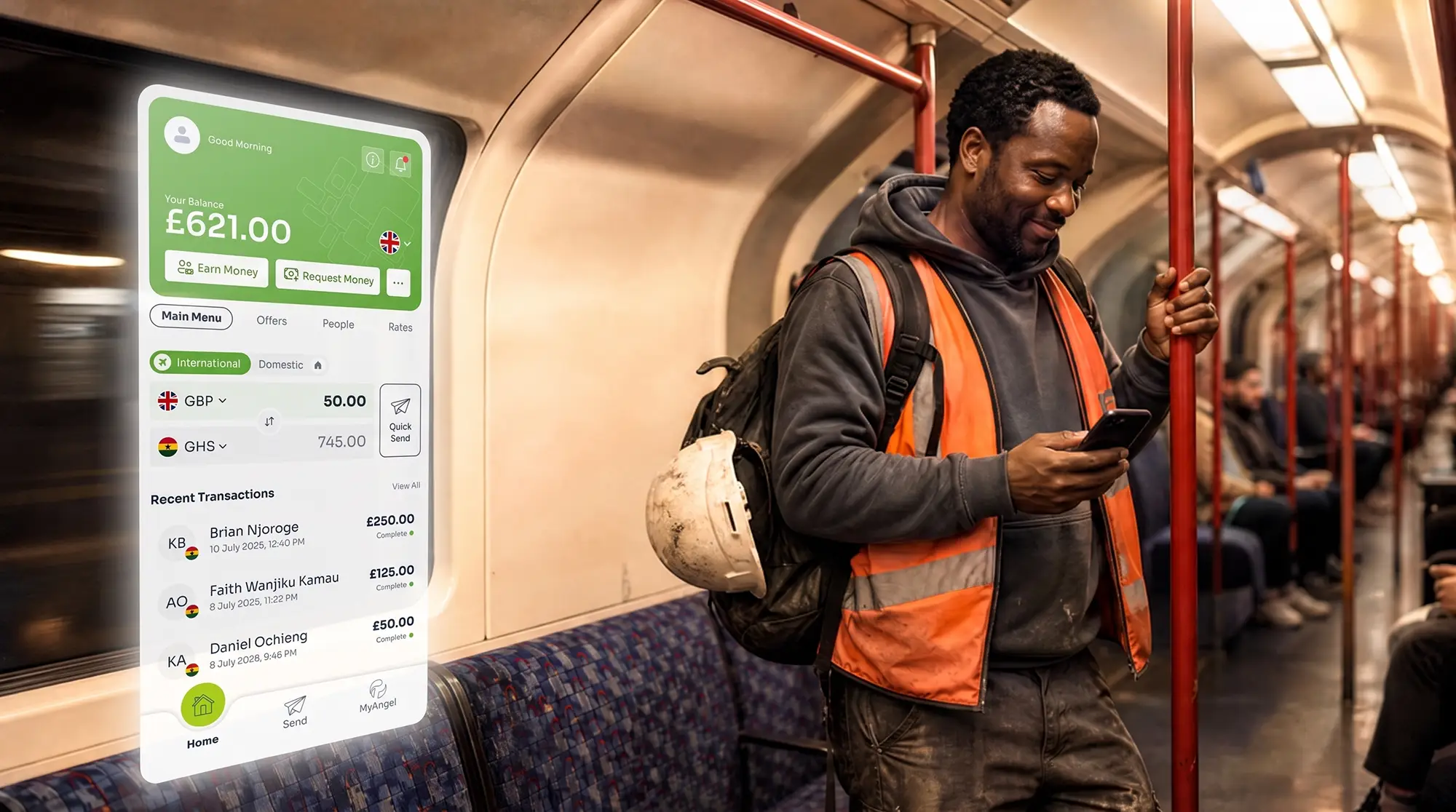
PayAngel was built to strip out the part of that cost it can control. It charges no transfer fees and no service fees on supported routes from the UK, USA, Canada and Australia, and it shows the exchange rate and the expected recipient amount before you confirm. It is a sensible place to start rather than the only option — and if you want the full provider-by-provider breakdown, our guide to international money transfer fees compares them in detail.
Quick answer
International money transfer fees come from three drivers stacked on top of each other: the infrastructure that moves money across borders, the compliance and risk work behind every payment, and the margin added when your currency is converted. Most of what people call “the fee” is really two numbers — an upfront charge plus a margin hidden inside the exchange rate — and providers trade one against the other.
That is why a zero-fee headline and a low total cost are not the same claim. PayAngel charges no transfer fees and no service fees on supported routes from the UK, USA, Canada and Australia, with the exchange rate and recipient amount shown before you confirm. When you compare providers, compare the amount your recipient actually receives — that one figure already contains all three drivers.
| Cost driver | What it pays for | Typical share of the cost |
|---|---|---|
| Moving the money | Card and bank rails, correspondent banks, local payout partners | Higher on bank and SWIFT routes, lower on digital wallet routes |
| Compliance and risk | AML and KYC checks, licensing, fraud cover, sanctions screening | Built into every transfer, larger where a route is higher-risk |
| Currency conversion | The exchange rate margin added above the mid-market rate | Commonly 1 to 3 percent, and often the single biggest line |
Moving the money
Compliance and risk
Currency conversion
What does it cost to actually move money across borders?
An international transfer is a chain, not a single hop. Your money passes from your card or bank account, through a sending institution, often across one or more correspondent banks, and finally to a bank account, mobile wallet or cash counter in another country. Cross-border payments cost more than domestic ones because every link in that chain is a separate business with its own fees. This chain is the first of the three drivers behind international money transfer fees.
On traditional SWIFT routes, the correspondent banks in the middle each take a cut — often reported in the range of $15 to $50 per hop — so your recipient receives less than you sent. That is why a bank wire can carry deductions you never see quoted upfront. Digital services that connect directly to mobile wallets skip most of those intermediaries, which is a large part of why they cost less.
The route matters more than the brand name on the app. A mobile-wallet payout usually avoids correspondent banks entirely, while a bank deposit on a thin corridor may pass through two or three. Before you send, it is worth checking which payout routes are available on your corridor.
How much of the fee is compliance and risk?
Every provider that moves money legally has to prove, on every transaction, that it knows who is sending, who is receiving, and that neither is on a sanctions list. That is the compliance layer, the second driver behind international money transfer fees, and it is not optional. Anti-money-laundering checks, know-your-customer verification, licensing in each country, fraud cover and sanctions screening all cost money, and that cost is spread across the fees every customer pays.
This layer is heavier on some routes than others. Where regulators treat a corridor as higher-risk, providers face more checks and higher costs, and remittance costs rise to match. It is also why some banks have simply withdrawn from parts of Africa over the past decade — a process the industry calls de-risking — leaving fewer routes and higher prices on the ones that remain.
| Compliance layer | What it protects |
|---|---|
| KYC and identity checks | Confirms the sender and recipient are who they claim to be |
| AML and sanctions screening | Stops money laundering and payments to blocked parties |
| Licensing and regulation | Keeps the provider authorised in every country it serves |
| Fraud cover and monitoring | Absorbs the cost of catching and refunding fraud |
Why is the exchange rate the real cost?
The mid-market rate is the rate banks trade currency with each other. It is the number a search engine or currency converter shows you, it sits between the buy and sell price, and it costs nothing to look up. Most providers do not give you that rate — they quote a slightly weaker one and keep the difference. That gap is the exchange rate margin, and on foreign exchange rates it is where a lot of the real cost hides.
The margin is a percentage of what you send, so it scales with the transfer. Industry reporting puts the typical markup on an international bank wire at 1 to 3 percent above the mid-market rate. On £1,000, a 2 percent margin costs £20 — more than most of the international money transfer fees quoted on the same route, and it never appears as a line item.
This is the paragraph every honest guide has to include. A zero-fee transfer is not a free transfer. PayAngel charges no transfer fees and no service fees on supported routes, and the exchange rate is still part of what the transfer costs. Any provider calling a transfer free is describing one line, not the total. The way to hold everyone — PayAngel included — to the same standard is to look up the mid-market rate, compare it against the rate you are quoted, and then check the recipient amount.
Why do remittance costs run higher for Africa?
Sub-Saharan Africa is the most expensive region in the world to receive money, at 8.46 percent average total cost against a 6.36 percent global average. The three drivers behind international money transfer fees all press harder here. Fewer providers compete on any given African corridor, so there is less pressure to cut prices. The currencies trade in thinner markets, which widens the exchange rate margin. And cash payout remains common, which costs more to service than a digital wallet.
Compliance weighs heavier too. As correspondent banks pulled back from the region under de-risking pressure, the routes that survived absorbed more cost. The GSMA reports that mobile money has begun to reverse this, with cross-border mobile money remittances now costing far less than cash on many African routes. Diaspora senders in London, New York, Toronto and Sydney sit in a comparatively well-served market — which is exactly why comparing carefully pays off.
How do international money transfer fees differ between providers?
Because the three drivers can be priced in different places, two money transfer services can quote the same fee and deliver very different amounts. A bank shows you a modest wire fee and hides the rest in the rate and the correspondent deductions. A digital operator may show a small fee, or none, and make its margin on the exchange rate. A useful transaction fees comparison therefore ignores the headline and looks at one number: what lands in the recipient’s account.
The table below shows how international money transfer fees split by provider type, using World Bank averages for a $200 transfer and GSMA data for mobile money. Treat it as a starting point rather than a quote — rates move daily, promotions expire, and a first-transfer waiver tells you nothing about your fifth transfer.
| Provider type | Average cost to send $200 | Where the cost sits |
|---|---|---|
| Banks | 14.99% | Wire fee, exchange rate margin, and SWIFT deductions |
| Transfer operators | 4.72% | Small fee plus an exchange rate margin |
| Mobile money | 3.54% | Mostly a small fee, with margins that vary by route |
| PayAngelZero-fee | No transfer fee, no service fee | The exchange rate alone, shown before you confirm |
Banks
Transfer operators
Mobile money
PayAngel
Zero-feeThe one habit that beats every fee
You cannot remove compliance costs or the cost of moving money across borders — those are real, and every legitimate provider carries them. What you can control is how much margin you accept on top. The single habit that beats every fee is to compare the recipient amount, on the same day, for the same amount, across two or three providers before you send.
Start with the mid-market rate as your benchmark, then read the recipient amount each service quotes. That figure already contains the fee, the exchange rate margin and any payout deductions. If one provider gets more money to your family on your corridor this week, that is the one to use.
PayAngel is a reasonable place to begin that comparison when you are sending to a supported country: no transfer fee, no service fee, the exchange rate and recipient amount visible before you confirm, and FCA regulation behind it. You can also protect the people you send to with RemitCare, which activates insurance cover alongside your transfer.
Frequently asked questions
Three drivers: the cost of moving money between two regulated financial systems, the compliance and risk work behind every payment, and the exchange rate margin when your currency is converted. Most of the cost sits in two places — an upfront fee and a margin built into the rate — and providers trade one against the other. The World Bank puts the global average cost of sending $200 at 6.36 percent, with banks at 14.99 percent and money transfer operators at 4.72 percent.
There are three drivers behind international money transfer fees. Moving the money (card and bank rails, correspondent banks and payout partners), compliance and risk (AML, KYC, licensing, fraud cover and sanctions screening), and currency conversion (the margin added above the mid-market exchange rate). Every transfer carries all three, but providers price them in different places, which is why headline fees can be misleading.
It is the difference between the mid-market rate — the rate banks trade at, which you can look up for free — and the weaker rate a provider offers you. The provider keeps the difference. On international bank wires it is commonly 1 to 3 percent of the amount sent, and it never appears as a line item on your receipt.
No. A zero-fee transfer means no transfer fee is charged; the exchange rate is still part of what the transfer costs. PayAngel charges no transfer fees and no service fees on supported routes, and the rate applies as it does everywhere. Some services waive fees on a first transfer or on selected routes only — always check the recipient amount rather than the fee line.
Compliance is one of the biggest components of international money transfer fees. Every legal provider must verify who is sending and receiving, screen against sanctions lists, and hold licences in each country it serves. That anti-money-laundering and know-your-customer work costs money, and it is spread across the fees all customers pay. On corridors regulators treat as higher-risk, the checks are heavier and the cost is higher.
Sub-Saharan Africa averages 8.46 percent, the highest of any receiving region, against a 6.36 percent global average. Fewer providers compete on each corridor, the currencies trade in thinner markets, cash payout is common and costs more to service, and correspondent banks have withdrawn from parts of the region under de-risking pressure, leaving fewer routes.
On traditional SWIFT routes, the intermediary banks that pass your payment along each deduct a charge — often reported in the range of $15 to $50 per hop. These deductions are rarely quoted upfront, so your recipient can receive less than you sent. Digital services that connect directly to mobile wallets usually avoid them.
Consistently, yes. Banks carry the highest international money transfer fees of any provider type. Banks average 14.99 percent on a $200 international transfer against 4.72 percent for money transfer operators, and they have sat above the global average for the whole period the World Bank has tracked. A typical outgoing international wire also carries a fixed fee before the exchange rate margin and any correspondent deductions.
Run the same amount, on the same day, to the same payout method, through two or three providers. Then compare one number: how much the recipient receives. That figure already contains the fee, the exchange rate and the payout route. Anything else is a partial view.
No. PayAngel charges no transfer fees and no service fees on supported international transfers from the UK, USA, Canada and Australia. The exchange rate applies and forms part of the cost, so the app shows the rate, the delivery estimate and the expected recipient amount before you confirm the transfer.
Send with the full picture, not just the fee
The fee on the screen is one line of a bigger bill. Once you can see the three drivers behind international money transfer fees — the cost of moving money, the compliance behind it, and the exchange rate margin — you can read any provider’s offer for what it really is and choose the one that gets the most money home.
No transfer fees. No service fees. The exchange rate and recipient amount shown before you send.