Safe transfers to Africa
How do you choose safe international money transfer services for Africa in 2026?
Sending money to family in Africa should feel certain, not stressful. The safest international money transfer services combine three things: clear regulation, transparent pricing, and real fraud protection. Before you send, you want to know who operates the service, how much your recipient will actually receive, and what happens if something goes wrong.
Safety and cost are linked. Money sent to Sub-Saharan Africa carries the highest average cost of any region — around 8.46% to send $200, according to the World Bank’s Remittance Prices Worldwide report — so a service that is both secure and low-cost protects more of what you send. In the UK, a genuinely safe provider is authorised by the Financial Conduct Authority, shows the fee and exchange rate before you confirm, and lets you check which countries and payout routes it covers.
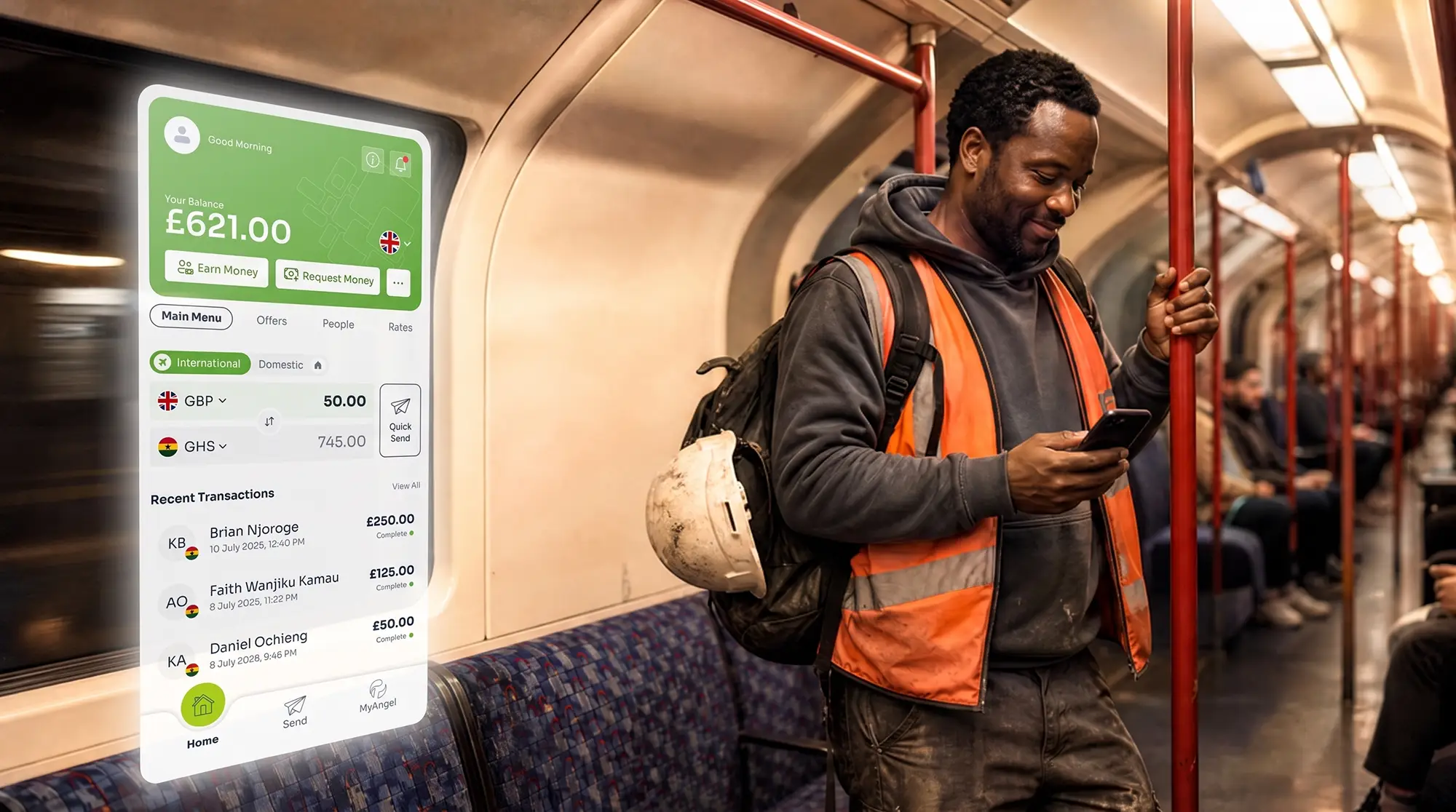
PayAngel is built for people sending from the UK, US, Canada and Australia to supported African countries. It is authorised by the Financial Conduct Authority (FRN 608108), charges no transfer fees and no service fees on supported routes, and shows the live rate and expected recipient amount before you send. It is a sensible first check rather than the only option — the sections below show how to compare it fairly against other services on safety, cost and payout method.
Quick answer
The safest international money transfer services for Africa are regulated by a financial authority, price transparently, and protect every transfer with identity checks, encryption and fraud monitoring. In the UK, look for Financial Conduct Authority authorisation, a fee and exchange rate shown before you confirm, and a payout route your recipient can actually use. PayAngel meets these tests for supported African corridors: it is FCA authorised, charges no transfer fees and no service fees, and offers mobile wallet, bank deposit and cash pickup where available.
No transfer is judged by its fee alone. A zero-fee service can still cost you through a weaker exchange rate, so the fairest way to compare international money transfer services is the final amount your recipient receives — sent on the same day, to the same payout method.
| Service | Regulation and safety | What to check before sending |
|---|---|---|
| PayAngelZero-fee | FCA authorised, FRN 608108, no transfer or service fees | Live rate, receiving country and payout method |
| Wise | FCA authorised, mid-market rate with an upfront fee | Transfer fee, destination and recipient amount |
| Remitly | FCA authorised, wide cash pickup network in Africa | Delivery method, rate and fee after any promotion |
| WorldRemit | FCA authorised, strong African corridor coverage | Receive method, delivery partner and total received |
| Sendwave | FCA authorised, app-based mobile wallet sends | Corridor, exchange rate and delivery estimate |
| LemFi | UK EMI authorised via RightCard Payment Services | Payout options, cash pickup may not be offered |
| Taptap Send | FCA authorised, no fee on many routes, rate margin applies | Corridor, rate and any route-specific fee |
PayAngel
Zero-feeWise
Remitly
WorldRemit
Sendwave
LemFi
Taptap Send
How do you check that international money transfer services are safe?
Start with regulation. In the UK, a legitimate money transfer provider must be authorised or registered by the Financial Conduct Authority, and you can confirm this yourself on the FCA register by searching the firm’s name or reference number. PayAngel appears there as PAYINC GROUP LIMITED, FRN 608108.
Then look at how the service protects your money and your data. Secure providers verify your identity, encrypt payment details, monitor transactions for fraud, and give you a record you can track after sending. Two-step verification on your account matters too — it stops anyone else logging in and sending in your name. PayAngel’s security policy sets out the checks it runs on every transfer.
Finally, judge transparency. The safest international money transfer services show the fee, the exchange rate and the recipient amount before you confirm, never after. If a provider hides the rate until the money has left your account, that is a reason to pause.
PayAngel is strongest when:
- the receiving country is one of the supported African corridors
- you want FCA-regulated sending with fraud checks on every transfer
- zero transfer fees matter for regular family support
- your recipient can use mobile wallet, bank deposit or cash pickup
| Security check | What it protects |
|---|---|
| FCA authorisation | Confirms the provider is regulated to handle your money |
| Two-step verification | Stops anyone else logging into your account |
| Payment encryption | Protects your card and bank details in transit |
| Rate shown before you send | Prevents hidden cost after the money leaves |
| Transfer tracking | Lets you follow the payment until it arrives |
| Named recipient details | Reduces the risk of paying the wrong person |
| Real support channel | Gives you help if a transfer is delayed or queried |
Which transfer method is safest: mobile wallet, bank deposit or cash pickup?
The payout method changes both the cost and the safety of a transfer. Mobile wallet transfers are fast and among the least expensive routes, averaging around 3.92% to send $200 by the World Bank’s measure, and they suit everyday support where the recipient uses M-Pesa, MTN Mobile Money, Airtel Money or a similar wallet. The main safety step is to confirm the wallet name and phone number before sending. You can see the wallet routes PayAngel supports on its mobile transfers page.
Bank deposits suit formal payments — school fees, rent, medical costs — where the recipient wants money in an account. Cash pickup services reach relatives who have no bank account or smartphone, but they carry the most personal risk: only share the pickup reference with the intended recipient, and never with someone who contacted you first asking for it.
| Payout method | Best for | Safety check before sending |
|---|---|---|
| Mobile wallet | Everyday and urgent support | Confirm wallet name and recipient phone number |
| Bank deposit | School fees, rent, larger payments | Match account name and number to the recipient |
| Cash pickup | Recipients with no account or phone | Share the reference only with the named person |
Mobile wallet
Bank deposit
Cash pickup
How do transfer fees and exchange rates affect safe transfers to Africa?
A safe transfer is also an honest one about cost. When you compare international money transfer services, every transfer can carry up to three charges: the transfer fee you see, a margin added to the exchange rate, and deductions taken by banks along the way. The fee line is rarely the whole cost, which is why a free or zero-fee headline should always be checked against the recipient amount.
The numbers are large for Africa. Sub-Saharan Africa is the most expensive region to send to, at about 8.46% to send $200 against a 6.36% global average, and banks average 14.99% against 4.72% for money transfer operators. Sending from the UK helps — it is the second least expensive G20 country to send from — but the rate still matters. PayAngel charges no transfer fees and no service fees on supported routes, and it still shows the live exchange rate, because the rate is part of the total. Our guide to international money transfer fees breaks the cost down in detail.
How do you avoid money transfer scams when sending to Africa?
Most fraud does not break the transfer service — it tricks the sender. The common pattern is urgency: a message claiming a relative is in trouble, a new online contact who suddenly needs money, or an accidental payment you are asked to refund. Before sending, contact the person directly through a number you already have, and confirm the request is real.
Two rules protect most senders. First, never send money to someone you have not met in person, however convincing the story, because a transfer to family is not reversible like a card payment. Second, only send to a named recipient whose details you can verify — the account name, wallet number or pickup reference should match the person you intend to help. The UK regulator’s ScamSmart guidance is a useful check if a request feels off.
Reputable international money transfer services add their own protection: identity verification, encrypted payments, fraud monitoring, and in-app warnings when a transfer looks risky. Use them, keep your app updated, and enable two-step verification on your account.
Can you send money to Africa safely from the UK?
Yes. The UK is one of the best-regulated and least expensive places in the world to send from, which is good news for the diaspora sending regular support home. UK money transfers to Africa are covered by Financial Conduct Authority rules, and the leading international money transfer services — including PayAngel, Wise, Remitly, WorldRemit and Sendwave — are all authorised or registered to operate here.
With PayAngel, UK senders can pay from a UK bank account or card and reach supported African countries through the app, choosing mobile wallet, bank deposit or cash pickup where available. You can check the full list of supported countries and payout routes before you send, add RemitCare family protection on qualifying transfers, or start with a country page such as sending money to Ghana.
A safe, low-cost way to send money to Africa
Start with the receiving country and your recipient’s need. A parent paying school fees may want a bank deposit; a sibling needing urgent help may prefer a mobile wallet; a relative without an account may need cash pickup. Choose the safest route they can actually use.
Then check the provider is regulated, confirm the recipient details through a channel you trust, and compare the recipient amount — not the fee — across two or three international money transfer services on the same day. Safe and low-cost are not opposites; the right transfer is both.
PayAngel is a strong place to start that comparison of international money transfer services when the destination is supported: FCA authorised, no transfer fees and no service fees, fraud checks on every transfer, and the rate and recipient amount shown before you confirm.
Frequently asked questions
Choose a provider that is regulated by a financial authority, prices transparently, and protects every transfer with identity checks, encryption and fraud monitoring. In the UK, look for FCA authorisation, a fee and exchange rate shown before you confirm, and a payout route your recipient can use. PayAngel meets these tests on supported African corridors and charges no transfer fees and no service fees.
Confirm it is authorised or registered on the FCA register, check that it shows the fee and exchange rate before you send, and look for identity verification, encryption, fraud monitoring and transfer tracking. The safest international money transfer services never hide the rate until after the money has left your account.
Yes. The UK is one of the best-regulated places to send from, and leading services including PayAngel, Wise, Remitly, WorldRemit and Sendwave are all authorised or registered with the FCA. It is also among the least expensive countries in the world to send from.
Each suits a different need. Mobile wallet is fast and low-cost for everyday support; bank deposit suits formal payments such as school fees; cash pickup reaches recipients with no account. Cash pickup carries the most personal risk, so only share the pickup reference with the named recipient.
PayAngel is a trading name of PAYINC GROUP LIMITED, authorised for payment services by the Financial Conduct Authority (FRN 608108). It uses identity verification, encryption, trusted payment networks and transfer tracking to protect every transfer, and you can verify its status on the FCA register.
No. A zero-fee transfer means no transfer fee is charged; the exchange rate is still part of what the transfer costs. PayAngel charges no transfer fees and no service fees on supported routes, and still shows the live rate and recipient amount before you confirm, because the rate forms part of the total.
Contact the person directly through a number you already have and confirm any urgent request is real. Never send money to someone you have not met in person, and only send to a named recipient whose account, wallet or pickup details you can verify. A transfer to family is not reversible like a card payment.
Compare the recipient amount, not the fee, across two or three regulated international money transfer services on the same day. Mobile wallet payout is consistently among the least expensive routes and is well covered across African corridors. The cheapest safe transfer is the lowest-cost route your recipient can actually use.
You need the recipient’s full name and the details for the chosen payout route: a wallet name and phone number for mobile wallet, an account name and number for bank deposit, or a pickup reference for cash collection. Matching these details to the right person is a key safety step.
Run the same amount, on the same day, to the same payout method, through two or three international money transfer services, then compare one number: how much the recipient receives. That figure already contains the fee, the exchange rate and the payout route, so it settles the comparison.
Send money to Africa safely, with zero transfer fees
PayAngel lets you send from the UK, US, Canada and Australia to supported African countries through the app. Check the destination, review the live rate, and choose the payout route your recipient can use.
FCA authorised. No transfer fees. No service fees. Clear transfer details before you send.